Trimble Strategic Review of Transportation Unit Continues as Company Debuts AI-Driven Logistics Innovations at Insight 2026

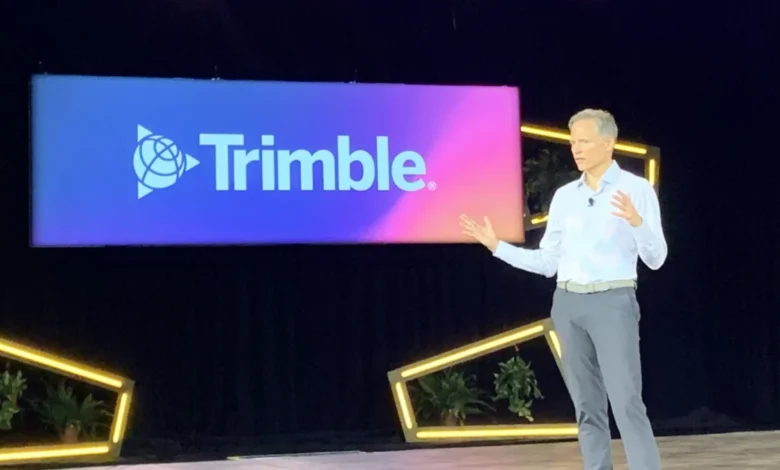
SAN DIEGO — The high-stakes strategic review surrounding Trimble Inc.’s transportation and logistics business remains active, with multiple outside entities maintaining their interest in acquiring the unit, according to Chief Executive Officer Rob Painter. Speaking at the company’s annual Insight 2026 conference in San Diego, Painter addressed the ongoing evaluation of the division, emphasizing that while inbound interest is robust, corporate leadership remains entirely comfortable continuing operations under the current corporate structure.
The evaluation, which was initially disclosed in August, has drawn intense scrutiny from financial markets and industry stakeholders alike. Trimble (Nasdaq: TRMB) enlisted financial powerhouse Goldman Sachs to help manage the unsolicited, credible acquisition approaches from multiple parties. Despite the speculation surrounding a potential multibillion-dollar transaction, Painter reiterated that no timetable has been established for a final decision, and a sale is far from a foregone conclusion.
The juxtaposition of a major corporate restructuring review alongside aggressive product rollouts has defined Trimble’s current operational posture. Even as Wall Street speculates on the future ownership of its freight tech portfolio, the company used its flagship conference to showcase a sweeping suite of technological enhancements. These innovations heavily emphasize autonomous artificial intelligence, voice integration, advanced route orchestration, and targeted expansion into increasingly intricate North American trade corridors, particularly along the U.S.-Mexico border.
Background and Chronology of the Strategic Review
To understand the current positioning of Trimble’s transportation segment, industry observers must look back at the company’s recent aggressive expansion strategy, which has turned its logistics division into a premier, scarce asset within the supply chain technology landscape.
The foundational roots of Trimble’s modern logistics footprint were significantly deepened through major capital deployment, highlighted by the strategic acquisition of Transporeon, which closed in 2023. This acquisition integrated a massive European freight procurement and transportation management platform into Trimble’s existing portfolio, creating an interconnected ecosystem spanning shippers, carriers, and logistics service providers across global markets.
The timeline of the current corporate evaluation unfolded publicly in August of the previous fiscal year. Trimble officially confirmed that it had received unsolicited, credible interest from various external entities looking to acquire all or parts of the transportation and logistics unit. Recognizing its duties as a publicly traded entity, Trimble leadership engaged Goldman Sachs to evaluate the inbound overtures, setting off a formal strategic review process designed to weigh potential divestiture or spinoff against continued internal operation.
As the review entered its current phase at the Insight 2026 conference, Painter confirmed to reporters that inbound interest from multiple parties remains entirely active. However, he also offered a sobering perspective on corporate strategic reviews generally, noting that a significant portion of such evaluations ultimately result in companies maintaining the status quo.
Evaluating the Options: Sale, Spinoff, or Status Quo
During an executive media roundtable at the conference, Painter outlined the decision-making parameters guiding the board of directors. He stressed that the ultimate objective of the review is to determine the absolute best path forward for three distinct constituencies: customers, employees, and shareholders.
When queried by media representatives regarding whether the review could encompass alternatives such as a corporate spinoff rather than a direct trade sale, Painter kept all options officially on the table. Simultaneously, however, he underscored his deep confidence in the existing business model and his personal satisfaction with Trimble remaining the parent organization.
"There is no update," Painter told reporters during the roundtable session. "Most strategic reviews end up with continuing to do what we do." He added that he feels "super, super comfortable to be the ongoing owner of the business," emphasizing that operations are continuing as usual without disruption to daily client services or internal morale.
Painter characterized the transportation division as a "scarce asset" defined by a highly distinctive technological infrastructure and proprietary network capabilities. Because these specialized capabilities are difficult to replicate in the open market, he noted that inbound interest from private equity firms and strategic industry buyers is entirely logical. Nevertheless, as the CEO of a publicly traded corporation, Painter reiterated that leadership operates under a strict fiduciary responsibility to evaluate credible proposals that could potentially unlock maximum value for shareholders.
Technological Momentum: Deploying AI Without Disruption
While executive leadership navigates the complexities of the strategic review, Trimble’s engineering and product teams have maintained an aggressive development cadence. The company leveraged the Insight 2026 platform to unveil a comprehensive modernization strategy aimed at embedding autonomous artificial intelligence deep within existing trucking and logistics workflows.
Michael Kornhauser, who directs Trimble’s North American transportation operations and applications business, emphasized that the new product releases are specifically designed to minimize friction for fleet operators. Rather than forcing long-standing enterprise customers to undergo expensive, disruptive rip-and-replace cycles of their core Transportation Management Systems (TMS), Trimble’s updated platforms enable immediate AI integration atop legacy architectures.
"We felt that that was the quickest way to get our customers in their existing systems to a place where AI can impact their business today," Kornhauser explained to conference attendees. By preserving decades of accumulated integrations and proprietary workflows, Trimble aims to lower the barrier to entry for advanced logistics technology, eliminating the massive operational risks typically associated with enterprise software overhauls.
Central to this modernization push is the introduction of Arc Agent, a sophisticated multi-skill artificial intelligence platform developed around Transporeon technology. Unlike narrow AI applications engineered to execute only single, isolated functions, Arc Agent is built to acquire a diverse array of skills over time, operating fluidly across procurement, execution, and financial settlement processes.
Philipp Pfister, vice president at Transporeon, likened the operational profile of Arc Agent to adding a digital employee to a logistics team. Users can train the agent on specific enterprise tasks, verify its operational outputs, and gradually grant it broader autonomous authority as institutional trust is established. Furthermore, the platform allows fleet operators and shippers to build custom, proprietary skills tailored directly to their internal business logic without requiring advanced engineering degrees or extensive professional services contracts.
As a practical illustration of the platform’s efficiency, Kornhauser pointed to a currency conversion capability developed for TMT Trucking. While a traditional custom-coding proof of concept historically required three to six months of dedicated engineering resources, the same capability was designed and deployed within Arc Agent in approximately 35 minutes.
Cybersecurity, Data Governance, and Human Oversight
The rapid deployment of autonomous AI across mission-critical supply chain operations naturally raises acute concerns regarding data governance, proprietary information leakage, and cybersecurity resilience. Recognizing these anxieties among enterprise clients, Trimble executives dedicated significant attention during the conference to addressing how the company protects sensitive corporate data.
Painter acknowledged that businesses experimenting with generative and autonomous AI frequently experience an initial phase of unbridled enthusiasm, quickly followed by pressing questions regarding operational control. "Pretty quickly, you go from, wow, this is pretty cool, to wait a minute, how are we going to govern this?" Painter noted.
To mitigate these risks, Trimble reportedly allocates tens of millions of dollars annually toward enterprise cyber resilience and data protection infrastructure. Pfister emphasized that Arc Agent incorporates a rigorous human-in-the-loop framework. This architecture ensures that sensitive operational decisions remain subject to direct human approval, while the system maintains an immutable, comprehensive audit trail of every automated action executed across the network.
"The data of our customers is like the number one priority that we have," Pfister stated. "We need to protect the data of our customers at any point in time."
Expanding Capabilities in Complex U.S.-Mexico Freight Corridors
Beyond artificial intelligence and software modernization, Trimble is strategically deepening its operational focus on increasingly complex geographic corridors, most notably cross-border freight movements between the United States and Mexico.
Amid shifting global manufacturing trends and nearshoring initiatives by major industrial corporations, cross-border logistics have grown exponentially in volume and operational complexity. Responding to these market demands, Trimble is significantly expanding its foundational geographic data assets.
Kornhauser highlighted ongoing enhancements to Trimble’s proprietary mapping data, noting that the company currently maintains approximately 6 million mapped geographic locations across North America, with active expansions targeting truck-specific waypoints and infrastructure within Mexico. These enhanced mapping datasets provide carriers and shippers with vital, real-time visibility into cross-border transits, mitigating traditional bottlenecks and compliance hurdles associated with international freight handoffs.
Broader Industry Implications and Outlook
The simultaneous progression of a major corporate strategic review and a massive product innovation cycle places Trimble in a unique and dynamic position within the broader supply chain technology sector.
Industry analysts suggest that by continuing to invest heavily in cutting-edge capabilities—such as voice AI, multi-skill agentic platforms, and expanded cross-border mapping—Trimble is actively enhancing the underlying market valuation of its transportation unit. Whether the ultimate outcome of the Goldman Sachs-managed review results in an outright acquisition by an outside suitor, a tax-free corporate spinoff into an independent publicly traded entity, or the continuation of business-as-usual under Trimble’s parent umbrella, the division remains a central pillar of modern supply chain infrastructure.
For now, executive leadership remains unhurried by external speculation. As Painter reiterated to stakeholders in San Diego, the company is entirely prepared to continue executing its strategic playbook indefinitely if a suitable transaction does not materialize.
"I’m super comfortable if I’m back in front of you again in weeks, months, or a year from now at our next conference and we’re executing the playbook because that’s how we’re operating right now," Painter concluded. "This business is a terrific business with an exciting future providing real value and unique value."